




Description
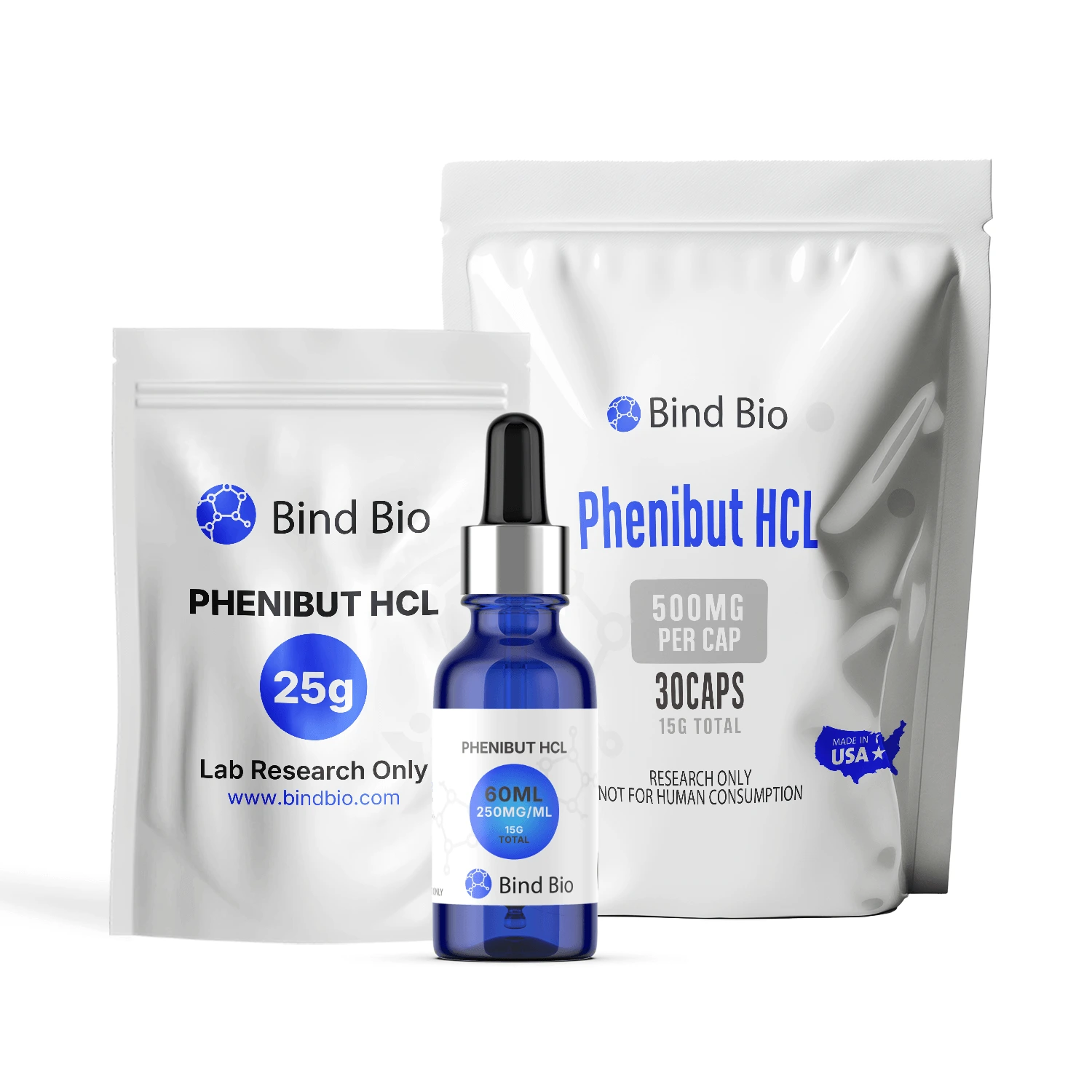
Bind Bio Phenibut HCL
Phenibut HCL
Phenibut, whose chemical name is beta-phenyl-gamma-aminobutyric acid HCl, is a drug that was created in Russia in the 1960s. It was made by Perekalin in St. Petersburg. In early studies, Phenibut was called “phenigamma.” It quickly became known for its calming and cognition-enhancing effects [R]. Structurally similar to gabapentin and pregabalin [R], it acts on the brain’s GABA receptors. Thus making it potentially effective for reducing anxiety and supporting mental clarity. Originally used in Russian medicine, Phenibut has recently gained popularity internationally. It is often sold online in the United States without a prescription and marketed as a dietary supplement or amino acid derivative [R]. Phenibut is available for purchase at Bind Bio in combination with hydrochloric acid. This form is more stable, water-soluble, and generally simpler to absorb and process. Phenibut HCl is more frequently employed in research due to its superior bioavailability. Bind bio Phenibut HCl is quality-approved for research. It’s available in carefully selected forms and brands to meet high research standards.
How does Phenibut HCL work?
Phenibut works by acting like GABA. It is a chemical that slows down the nervous system and creates a calm effect. It is also known to easily cross the blood-brain barrier, Phenibut binds to GABA(B) receptors in the brain. These receptor agonist help lower the excitatory signals that can cause worry and anxiety. When the GABA(B) receptor is activated, it opens up some ion channels. This helps keep the electrical charge of neurons stable and their activity under control. Phenibut mostly affects GABA(B) receptors, but it may also have some effects on GABA(A) receptors. Which are involved in its calming effects. Dopamine is a neurotransmitter that affects mood, drive, and reward. Phenibut also changes dopamine. Phenibut calms and uplifts by increasing dopamine levels and molecules in emotional brain regions, reducing anxiety [R].
Properties
Phenibut HCL
| CAS number | 3060-41-1 |
| Molar Mass | 215.67 g/mol |
| Chemical Formula | C10H13NO2 • HCl |
| IUPAC Name | 4-amino-3-phenylbutanoic acid;hydrochloride |
Table Source: [R]
Potential Benefits of Phenibut HCL
Anxiety Reduction and Mood Enhancement
Studies on rats have shown that Phenibut has a big impact on lowering anxiety and improving mood. Phenibut works on GABA(B) receptors to lower brain activity and calm the nervous system. The R-phenibut isomer binds more strongly to these receptors. Tests showed it effectively reduced stress and depression-like symptoms. Its calming effect suggests potential for improving mood. It may also help manage worry through its action on GABA(B) receptors. [R]
Pain Relief
In a similar study to the one above, Phenibut also showed strong pain-relieving effects in rats. Phenibut was able to lessen the feeling of pain in the animal model by working with strong GABA(B) receptors. [R]
Brain Impact: Learning and ADHD
Research suggests Phenibut may improve learning and attention by enhancing cognitive processes. One study showed that ADHD patients taking noofen (phenibut) had superior memory, attention, and self-control than those taking multivitamins. Test subjects showed improved sustained, directed, and divided attention. They also had better memory for spoken information. These early findings suggest that phenibut could offer long-term cognitive benefits [R]. Regular use in clinical settings may support these improvements. Further studies are needed to confirm these clinical effects.
In another study, phenibut was administered to rabbits. It enhanced both inhibitory and excitatory responses in the brain’s cortical neurons. This suggests phenibut may support brain processes related to learning and inhibition. By activating the potent GABA system, Phenibut may improve cognitive focus and calmness [R]. These findings suggest Phenibut may help learning by supporting brain function. Specifically, it could improve attention, memory, and self-control.
Improves muscle flexibility and strength
Phenibut shows potential in enhancing muscle function, especially in individuals with movement limitations. It influences dopamine, a neurotransmitter involved in muscle control and motor activity. In a study with Parkinson’s patients, Phenibut improved muscle flexibility and strength. Patients showed better motor function, reduced muscle stiffness, and increased range of movement. However, those who took Phenibut alone had minimal results [R]. This suggests phenibut’s potential synergistic effects when used with other dopamine-supporting treatments. Further research is needed to explore these interactions.
Side Effects and Safety Considerations
Phenibut is generally well-tolerated by research subjects in controlled study environments[R]. It shares anxiolytic and sedative effects with other GABA analogs like pregabalin and gabapentin [R]. These effects help ease tension and promote calmness without significant adverse reactions. However, side effects may occur, especially with high doses or prolonged use:
- Gastrointestinal Distress
Research subjects sometimes reported nausea and abdominal discomfort.[R] - Sedation and Impaired Coordination :
GABAergic actions may cause sleepiness and impair motor coordination, reducing attentiveness. [R] - Withdrawal Symptoms:
Long-term usage can cause Phenibut dependency. Like baclofen and benzodiazepines, discontinuation can cause withdrawal symptoms. Other indications symptoms may include anxiety and insomnia. [R]
Most side effects are linked to high dosages or Phenibut intoxication. It’s essential to determine and adhere to safe dosage levels for optimal results in research settings.
Why Choose Bind Bio to buy Phenibut HCL?
Bind Bio nootropics is your best choice for buying Phenibut HCl. Why? We carefully chose reliable research chemical suppliers based on strict standards.. We focus on purity, pricing, and quality to benefit our clients. Our suppliers offer a wide variety of compounds, including peptides, SARMs, nootropics, and more. We provide not just one type but all kinds of forms (powder, tablet, etc) to suit your research needs.
Meeting and passing stringent quality control standards is crucial to Bind Bio. We have selected RCD Bio, PureRawz, and BehemothLabz as our research chemical suppliers. These top-tier vendors were chosen for their quality and seamless process. We also took into consideration its quality service on fast shipping, receiving payment, and after-sale.
Disclaimer
Bind bio provides general information only. We aim for accuracy and dependability, but we cannot guarantee the information’s completeness, reliability, suitability, or availability. You assume the risk of using such information.
The content on Bind bio should not replace nutrition, supplement, medical advice, diagnosis, or treatment. Consult your doctor or other certified health expert with any medical questions. Professional medical advice should never be delayed based on Bind bio information.
Bind bio may include hyperlinks to external websites that are not governed or managed by our organization. We do not exert control over the nature, content, or availability of those sites. The presence of links and clinical trials does not imply a recommendation or endorsement. Bind Bio is not responsible for any loss or damage, including indirect or consequential losses. This includes data loss or profits resulting from the use of this website. Users are advised to proceed at their own discretion. This disclaimer may be modified or amended at any time without prior notice. By persisting in the use of Bind bio, you acknowledge and consent to adhere to the stipulations outlined in this disclaimer. Should you find these terms unacceptable, we kindly ask that you do not utilize our website.
FAQ
What is the half-life of Phenibut?
The pharmacokinetics of Phenibut or fenibut are not fully known. Its known pharmacology is to quickly spread to places like the brain, kidneys, liver, and urine after phenibut ingestion . The half-life of Phenibut in the body is about 5.3 hours [R].
Is Phenibut HCl products banned?
Phenibut HCl is not universally banned, and its legal status varies by country. In the United States, it is not a controlled substance but is banned as a dietary supplement by the FDA due to safety concerns. Some countries regulate it as a controlled substance or ban it because of potential abuse and side effects. In other regions, it may still be available as a supplement or research chemical. It’s important to check local regulations before purchasing.
Is Phenibut HCl safe?
Phenibut HCl can be safe when used in controlled, low doses. Drug administration is generally well-tolerated, providing benefits like anxiety relief and improved sleep. However, high doses or prolonged use may lead to side effects mentioned above. To minimize risks in your research, it is crucial to follow safe dosage guidelines. This is especially important in studies on neurotic patients, anxiolytic effects, and psychoactive drugs.


Reviews
There are no reviews yet.