
BindBio has a handy BMI (Body Mass Index) calculator below to calculate your body fat estimate. This useful tool can gauge your risk against various diseases and assess health risks, determining if you are within a healthy weight range.

BMI is one popular method for determining if a certain test subject is within a weight-healthy range. But it does not only need the weight as a factor for calculation. Height is also a must. Even though the BMI calculator is commonly used, it is still a question of how height affects BMI.

Height is the vertical measurement taken from the bottom (usually the feet) to the top (usually the head) of a subject when standing upright. It is commonly measured in centimeters or inches. It also affects physical abilities, BMI calculations, and potential health consequences; that is why it is significant in fields like healthcare and sports.
There isn’t an ideal height for BMI since it is designed to adjust for height. Instead, the focus should be on maintaining a healthy BMI range relative to height and certain limitations that exist:
The following calculation shows that height has a direct impact on BMI in the metric system. Height significantly affects the final BMI value because it is squared in the computation.
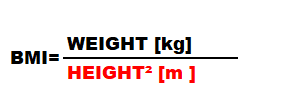
To maintain BMI within the same range, weight must grow at a squared pace as height increases. In contrast to shorter test subjects, who may achieve higher BMI values with less weight, taller heights can carry more weight without entering a higher BMI group.

Although height plays a significant role in determining BMI, it does not give a complete picture of a body’s composition. Height concerning weight can reveal possible health risks. To obtain a comprehensive picture of health, height must be taken into account in addition to other health indicators like waist circumference or body fat percentage.
BMI depends on both height and weight. Height adjusts for weight, but BMI doesn’t account for factors like muscle mass or fat distribution.
Since height is squared in the calculation, it has a substantial impact on BMI. Small changes in height can significantly affect the BMI score.
Two test subjects with different heights can have the same BMI if their weight adjusts accordingly to their height.
Height determines how much weight is considered underweight, normal, overweight, or obese. Taller heights need more weight to enter higher BMI categories.
Not necessarily. A high BMI could indicate more muscle mass rather than fat, especially in muscular test subjects.
Subscribe to Bind Bio’s newsletter for the latest breakthroughs, research updates, and exclusive content. Stay informed and connected with our cutting-edge discoveries in biotechnology.
Bind Bio pioneers biotech, reshaping healthcare with innovative solutions, dedicated to advancing science for a healthier tomorrow.
Bindbio © 2026. All Rights Reserved.