








Description
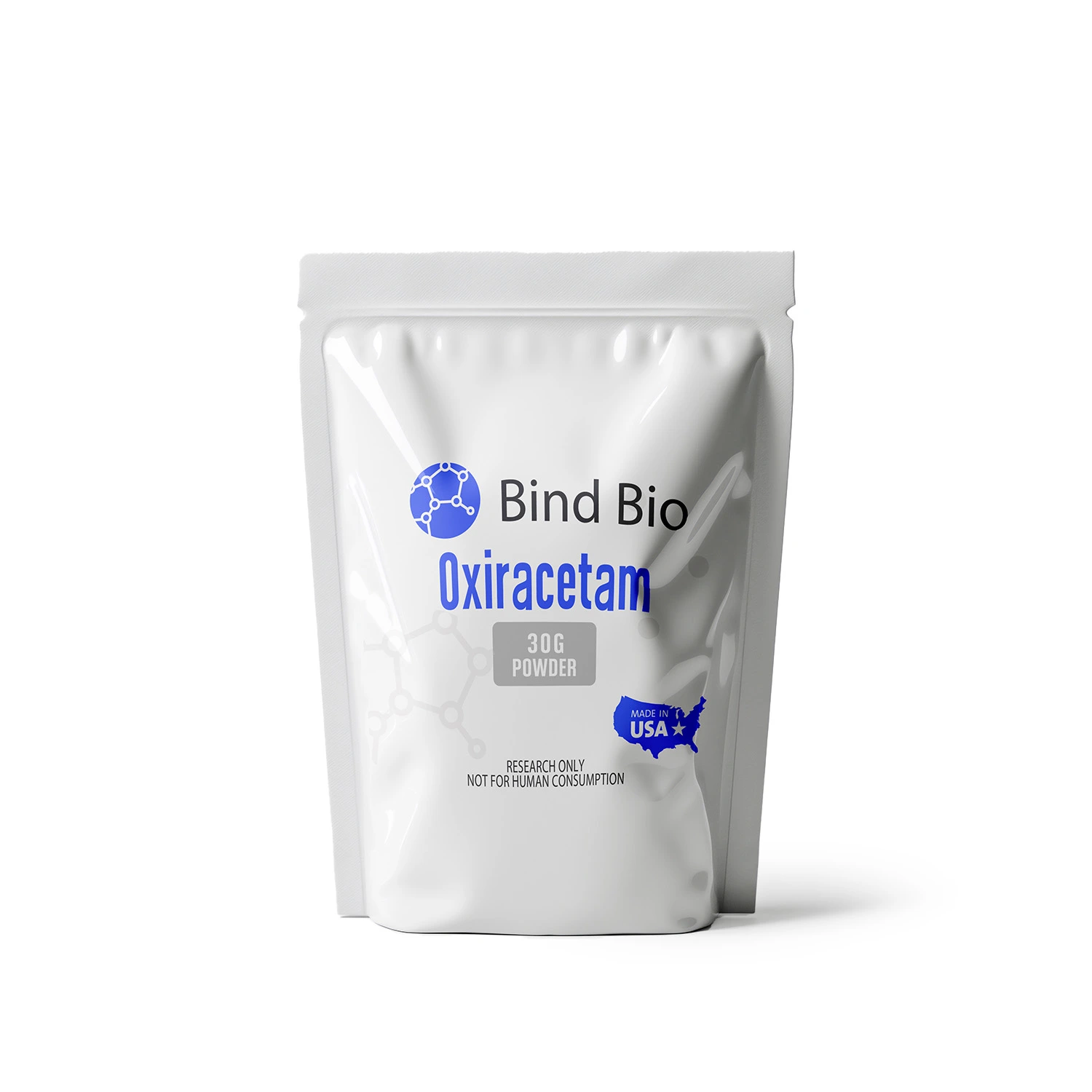
Oxiracetam
Oxiracetam is a drug that is derived from γ-aminobutyric acid (GABA). Inhibiting neural activity is a critical function of this neurotransmitter [R]. It belongs to the racetam family, a group of compounds that are recognized for their cognitive-enhancing properties [R]. As a derivative of GABA, it is known as an alternative treatment to cognitive deficits of cerebrovascular origins [R]. It is a mild stimulant known for its potential cognitive-enhancing properties [R]. Which is why it is also referred to as a nootropic drug or neuro-stimulants cognitive enhancer. It is a type of cognitive aid that is meant to potentially make mental abilities like learning, memory, and attention better [R].
Few studies have been done on oxiracetam in healthy test subjects. According to research, there may be brain benefits, especially for older patients or people with dementia. However, it’s not a prescription medication. In many countries, it is regarded more as a supplement.
Pharmacokinetics of Oxiracetam
Oxiracetam might change how the brain uses energy by changing glutamatergic and cholinergic neurotransmission [R]. It seems to boost the action of acetylcholine, which is important for learning and remembering things. This also includes making it easier for acetylcholine, a neurotransmitter that is important for brain activity [R]. to be released and taken up. Oxiracetam helps neurons talk to each other better by increasing acetylcholine. It might also change the release of glutamate, which is another neurotransmitter linked to brain function and synaptic learning [R]. This double action raises levels of neurotransmitters that are important for memory and learning [R]. All of these things help improve brain performance as a whole [R].
Oxiracetam may also influence the glutamate receptors, particularly by modulating AMPA receptors [R]. These receptors facilitate fast synaptic transmission. They play a key role in synaptic plasticity, the process where synapses strengthen or weaken over time [R]. By modulating AMPA receptors, oxiracetam may enhance synaptic plasticity. This could contribute to improved cognitive function in clinical research.
Properties
| CAS | 62613-82-5 |
| Molecular weight | 158.16 g/mol |
| Chemical Formula | C6H10N2O3 |
| IUPAC Name | 2-(4-hydroxy-2-oxopyrrolidin-1-yl)acetamide |
Table source: [R]
Potential Benefits of Oxiracetam
Neuroprotection: oxidative stress and inflammation
Oxidative stress and inflammation are fundamental biological processes that, when balanced, support normal physiological function. Oxidative stress arises from an imbalance between reactive oxygen species (ROS) and the body’s antioxidant defenses [R]. Inflammation, meanwhile, is a complex response involving immune cells and inflammatory mediators. It is essential for tissue repair and defense against pathogens. However, chronic inflammation can contribute to diseases like neurodegenerative disorders [R]. When oxidative stress and inflammation become dysregulated, they may lead to various diseases.
Oxiracetam has been studied for its potential neuroprotective effects. Research suggests it may help reduce oxidative stress and inflammation in the brain. By decreasing neuroinflammation, oxiracetam could protect neurons from damage. This protection may improve cognitive function and memory. In vitro and in vivo studies show neuroprotective effects, especially in cases of organic brain disorders. It has also shown promise in reducing neuroinflammation and damage from traumatic brain injuries. These effects may contribute to better cognitive function. They may also support improved motor skills [R][R][R].
Further research has explored Oxiracetam’s neuroprotective potential for mild to moderate TBI and post-stroke neuronal damage [R]. Clinical studies investigated its efficacy in mitigating post-stroke cognitive decline. Participants underwent cognitive assessments after 36 weeks. Although the study did not confirm Oxiracetam’s efficacy in preventing post-stroke cognitive decline, adherence to exercise guidelines showed benefits. Exercise was particularly helpful in maintaining cognitive function. This benefit was observed in individuals at the chronic stage of stroke. It appeared to be especially valuable for those at high risk of dementia [R].
Improved Memory and Vascular dementia
Oxiracetam may enhance memory formation, retention, and recall by modulating neurotransmitter activity [R]. It may also have potential applications in addressing neuronal degeneration in Alzheimer’s disease [R]. Studies have explored how Oxiracetam aids neurodegenerative diseases like Alzheimer’s. Oxiracetam was found to be well-tolerated and effective. It potentially improves cognitive function and microglial activation. This benefit was observed in patients with mild to moderate infarct dementia , including Alzheimer’s disease R] [R] [R].
A study comparing oxiracetam and hydroxypiracetam in rodent models showed both nootropics were effective in reducing amnesia from cerebral electroshock. However, oxiracetam performed better in specific cognitive tasks. It also significantly improved step-down retention in mice, whether given before or after the learning trial. In aged rats, oxiracetam enhanced performance in an active avoidance task. Piracetam, on the other hand, showed no effect in this task [R].
Enhanced Cognitive Function
Oxiracetam is structurally similar to piracetam and has cognitive-enhancing properties. Studies suggest it may be more potent in certain cognitive domains [R]. Oxiracetam shows potential as an agent against chronic cerebral hypoperfusion (CCH). It is a condition linked to cognitive impairment. In studies with CCH-induced rats, oxiracetam improved cognitive function. It protected neural plasticity, prevented white matter damage, and enhanced problem-solving, decision-making, and creativity [R][R][R]. Researchers used behavioral, electrophysiological, and histological methods to study these effects. Results showed improved cognitive function and preserved neural plasticity. Oxiracetam also mitigated white matter damage.
Brain Cerebral Ischemia
To investigate the effects of oxiracetam on brain metabolism following focal cerebral ischemia, rats were subjected to ischemia and treated with different doses of oxiracetam. Local cerebral glucose utilization (LCGU) was measured 24 hours post-ischemia. Results showed that doses of 400 mg/kg and 800 mg/kg significantly reduced the extent of LCGU in the ischemic core. The drug also reduced LCGU in the penumbra. Additionally, it improved metabolic activity in the contralateral hemisphere. The findings suggest oxiracetam’s potential as a therapeutic agent. Oxiracetam may help mitigate the effects of brain damage. It could also reduce cognitive impairment. Further studies are needed to confirm these effects. Results are promising for oxiracetam’s role in brain injury treatment [R].
Oxiracetam Side Effects and Safety Considerations
Oxiracetam safety and efficacy claim is supported by a study on elderly test subjects. It demonstrates the linear pharmacokinetics of Oxiracetam within the studied dosage range in healthy test subjects. However, in elderly test subjects, the pharmacokinetic profile is altered. There are slower absorption and elimination rates. This suggests that a dose adjustment may be necessary for elderly test subjects with impaired renal function [R].
Initial improvements were observed across various cognitive domains. The long-term benefits of oxiracetam’s active ingredient may be limited. Further research is needed to explore the optimal duration of treatment. Potential mechanisms of action should be explored to maximize its therapeutic potential. Some of the common nootropic drug side effects are:
- Headaches are the most common side effect among racetams due to increased acetylcholine activity in the brain [R] [R].
- Sleep Disturbances. Oxiracetam’s mild stimulant effect may disrupt sleep patterns, especially when taken late in the day [R][R].
- Gastrointestinal problems. Some individuals report mild nausea or gastrointestinal upset when taking cognitive nootropics like oxiracetam. Taking it with food may help minimize these symptoms [R].
- Mental Fatigue. Oxiracetam may occasionally cause cognitive decline, Brain Fog, Mental weariness, or other mental difficulties due to overstimulation [R] [R].
Why Choose Bind Bio to buy Oxiracetam?
Bind Bio nootropics is your best choice for buying Oxiracetam. Why? We carefully chose reliable research chemical suppliers based on strict standards. We focus on purity, pricing, and quality to benefit our clients. Our suppliers offer a wide variety of compounds, including peptides, SARMs, nootropics, and more phenylpiracetam . We provide not just one type but all kinds of forms (powder, tablet, etc) to suit your research needs. To put everything within your grasp, our product details also come with scientific product information to bring everything to your own reach.
Meeting and passing stringent quality control standards is crucial to Bind Bio. We have selected RCD Bio, PureRawz, and BehemothLabz as our research chemical suppliers. These top-tier vendors were chosen for their quality, quantity and seamless process. We also took into consideration its quality service on fast shipping, receiving payment, and after-sale.
Disclaimer
Bind bio provides general information only. We aim for accuracy and dependability, but we cannot guarantee the information’s completeness, reliability, suitability, or availability. You assume the risk of using such information.
The content on Bind bio should not replace nutrition, supplement, medical advice, diagnosis, or treatment. Consult your doctor or other certified health expert with any medical questions. Professional medical advice should never be delayed based on Bind bio information.
Bind bio may include hyperlinks to external websites that are not governed or managed by our organization. We do not exert control over the nature, content, or availability of those sites. The presence of links and clinical trials does not imply a recommendation or endorsement. Bind Bio is not responsible for any loss or damage, including indirect or consequential losses. This includes data loss or profits resulting from the use of this website. Users are advised to proceed at their own discretion. This disclaimer may be modified or amended at any time without prior notice. By persisting in the use of Bind bio, you acknowledge and consent to adhere to the stipulations outlined in this disclaimer. Should you find these terms unacceptable, we kindly ask that you do not utilize our website.
FAQs about Oxiracetam
Do these nootropics—oxiracetam, piracetam, and aniracetam—have differences?
Oxiracetam, piracetam, and aniracetam are chemical names of nootropics, each with unique effects and solubility profiles. Oxiracetam, known chemically as 4-hydroxy-2-oxopyrrolidine-N-acetamide, stands out for its stimulating cognitive boost. It improves focus and memory while promoting the release of acetylcholine, a neurotransmitter essential for learning and memory. Oxiracetam has high water solubility. It crosses the blood-brain barrier efficiently. Unlike other stimulants, it does not cause jitteriness. It’s often favored in research on degenerative dementia due to these properties. Piracetam offers milder cognitive support, while aniracetam, with higher fat solubility, may reduce anxiety and enhance focus.
What is the half-life of Oxiracetam?
The half-life of oxiracetam can vary depending on factors such as age and renal function. In healthy test subjects, this nootropic compound half-life is approximately 7.7 hours. However, in elderly test subjects, the half-life can be significantly longer, around 12.3 hours, due to slower absorption and elimination rates [R]. These are average values, and individual variations may occur. Additionally, factors such as liver and kidney function can influence the drug’s pharmacokinetics.
It should be noted that, as with all other drugs, oxiracetam may have drug interactions. A preliminary study suggests that certain anti-epileptic drugs, such as carbamazepine and valproic acid, can interact with oxiracetam. This interaction may lead to a faster elimination rate from the body [R]. As a result, more frequent dosing of oxiracetam may be needed. The dose could vary (mg per day) to maintain its therapeutic effects.
Are Oxiracetam products banned?
Oxiracetam is not a regulated substance in many countries, including the United States. This means it’s often sold as a dietary supplement or research chemical, rather than a prescription medication. However, its legal status can vary depending on specific regulations in different regions [R].
Is oxiracetam safe?
Oxiracetam is well-tolerated and has a predictable pharmacokinetic profile. This makes it a suitable candidate for further clinical investigation. As with any nootropic or supplement, it’s crucial to consult with a healthcare professional. This is especially important if you have underlying health conditions for adverse effects. It is also important if you are taking other medications.
Reviews
There are no reviews yet.