





Description
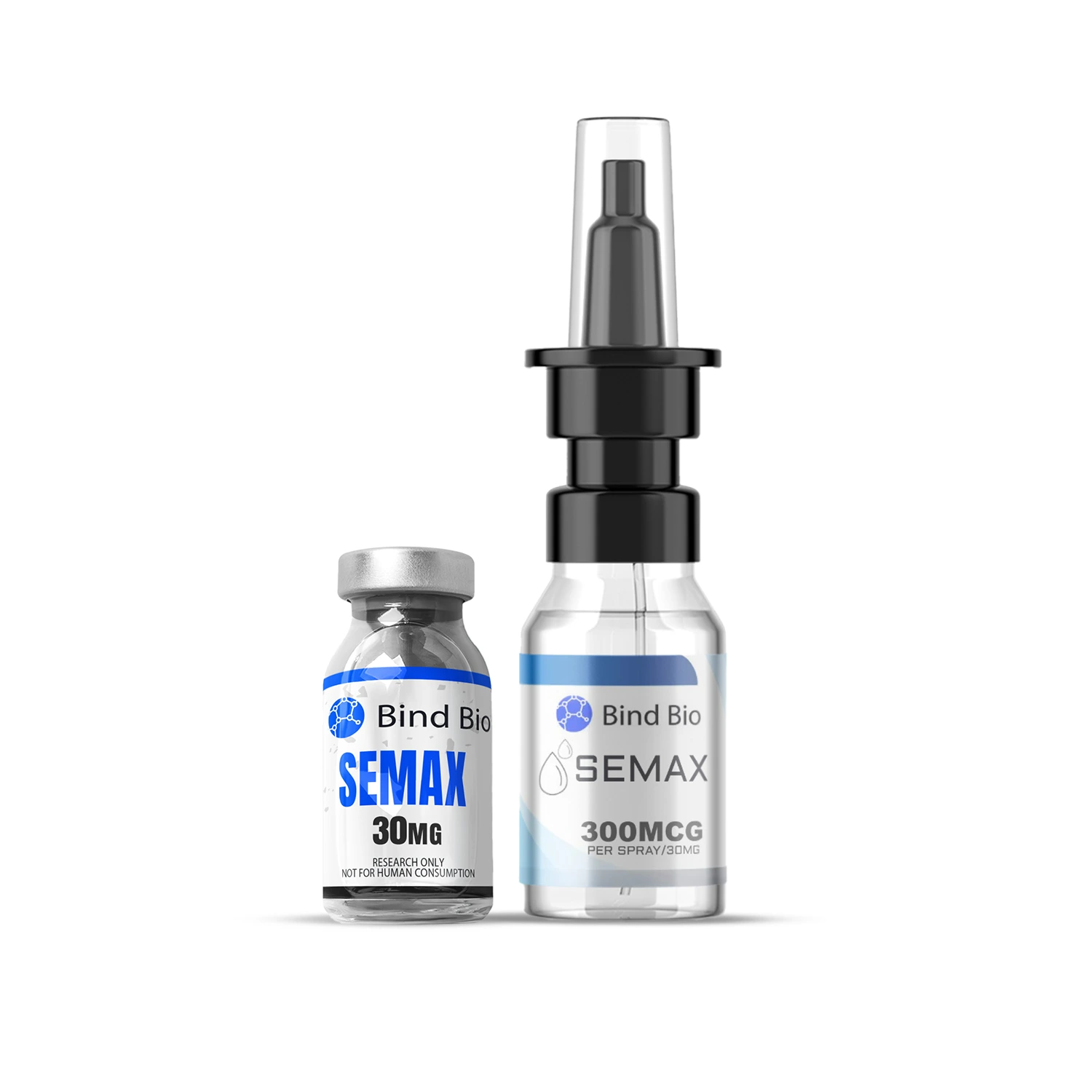
Bind Bio Semax
Semax is a synthetic peptide made up of seven amino acids. It is an analogue of adrenocorticotropic hormone (ACTH). [R]. This heptapeptide has been engineered to retain certain beneficial effects of ACTH, but with enhanced properties suited for neurological support. The structure of Semax allows it to interact with the brain in ways that protect neurons and improve cognitive functions.[R]
How does Semax work?
Semax affects brain neurotrophin expression, making it a potential neuroprotective and nootropic substance. Semax has been shown to rapidly transcribe BDNF and NGF genes within 30 minutes of treatment. The survival, proliferation, and differentiation of neurons depend on these neurotrophins. In studies, Semax has been shown to increase BDNF and other related proteins in the hippocampus, an area essential for memory and learning. This suggests it may help enhance cognitive function and protect neurons from damage. On top of its cognitive benefits, Semax has shown anxiolytic (anti-anxiety) effects, potentially offering relief from stress. Research suggests that Semax can modulate the serotonin system, which is often linked to mood regulation. In animal studies, Semax administration decreased the expression of the c-fos gene, which is associated with stress responses, in areas of the brain related to emotional processing. Furthermore, chronic use of Semax led to reduced anxiety and depression-like behaviors without affecting exploratory activity in non-stress conditions. This suggests that Semax may be useful for managing anxiety and improving emotional well-being. It interacts with brain systems that regulate stress and mood [R].
Properties
Semax
| CAS number | 80714-61-0 |
| Molar Mass | 813.93 g/mol |
| Molecular Formula | C37H51N9O10S |
| IUPAC Name | (2S)-1-[2-[[(2S)-1-[(2S)-2-[[(2S)-2-[[(2S)-2-[[(2S)-2-amino-4-methylsulfanylbutanoyl]amino]-4-carboxybutanoyl]amino]-3-(1H-imidazol-5-yl)propanoyl]amino]-3-phenylpropanoyl]pyrrolidine-2-carbonyl]amino]acetyl]pyrrolidine-2-carboxylic acid |
Table Source: [R]
Potential Benefits Peptide of Semax
ADHD and Rett syndrome
Semax treatment showed potential benefits in managing ADHD and Rett syndrome. Unlike typical treatments, such as methylphenidate, that target ADHD symptoms by stimulating dopamine pathways, Semax works without hormonal activity. It acts on cognitive processes like memory and attention. Research shows that Semax enhances attention and memory in both animal and human studies. It has been found to increase dopamine release in the brain. This release is often reduced in individuals with attention-deficit hyperactivity disorder (ADHD). Additionally, Semax was known to potentially boost BDNF. BDNF is a protein crucial for brain development and plasticity. This is particularly relevant because ADHD is linked to issues with both dopamine and BDNF function. Semax may help manage symptoms. Semax may also help Rett syndrome, a rare genetic illness that affects brain development, by increasing BDNF levels, which are disrupted by MECP2 gene mutations [R]. In another clinical study, it was also concluded that BDNF function may potentially improve ADHD symptoms [R]. This further supports Semax’s potential to aid in managing neurodevelopmental conditions.
Neuroprotective properties and Reduce behavioral issues
In a study investigating Semax, researchers found it may protect brain cells and reduce behavioral issues caused by damage to the dopaminergic system in rats. Damage was induced using MPTP, a neurotoxin known to harm dopamine-producing neurons. This led to reduced movement and heightened anxiety in the animals. Administering Semax daily through the nose at a dose of 0.2 mg/kg helped lessen these symptoms. This showed that Semax may counteract such brain damage. Its protective action is thought to stem from its ability to regulate dopamine levels and promote neuron survival. Semax has also been found to increase the production of key neurotrophic factors. These include NGF and BDNF, which support neuron health and regeneration. These neurotrophic properties may help heal and restore damaged dopamine pathways. This suggests Semax supports both the survival and functional recovery of neurons affected by toxins. [R]
In another study, Semax protected rat nerve cells from oxidative stress, which can cause brain lesions like stroke. When cells were exposed to hydrogen peroxide, they showed signs of necrosis, a type of cell death. However, adding Semax to the culture medium reduced this damage in a dose-dependent manner. Its effectiveness increased with dosage. The timing of Semax administration also influenced its protective effect. This suggests its ability to shield neurons from oxidative damage could be key to its potential role in protecting the brain [R] during events like ischemic stroke and other neurodegenerative diseases.
Nootropic Effect on Brain Learning and Efficiency
A study found that the peptide Semax improved learning and mental efficiency. When tested, Semax showed EEG brain activity changes similar to nootropic receptor medications. Specifically, Semax also has a “anti-hypoxic” impact, helping brain synapses adjust to low oxygen. In challenging circumstances, this can help cognitive function. It is particularly useful in tasks requiring sustained concentration. Semax also has a “anti-hypoxic” impact, helping brain synapses adjust to low oxygen. In challenging circumstances, this can help cognitive function. This can be beneficial for maintaining cognitive function in demanding environments. This range of benefits highlights Semax’s potential molecular mechanisms. It supports cognitive performance and resilience. [R]
Increased Locomotor Activity
Semax was tested for its effects on dopamine, particularly when combined with D-amphetamine. Semax was shown to amplify dopamine (DA) levels in the brain region known as the striatum, a key area involved in movement and reward processing. Behavioral tests in mice also confirmed that Semax enhances D-amphetamine’s impact on locomotor activity. On its own, D-amphetamine boosted movement levels to 182% above normal. When combined with Semax, this effect rose even further to 261%. This underscores Semax’s role in amplifying the activity-inducing effects of the stimulant. The increase in dopamine activity and movement suggests that Semax may interact with dopaminergic pathways. These pathways could enhance stimulant effects. This interaction potentially offers insight into its applications for modulating dopamine in various research contexts. [R]
Anxiety and Depression
In a study Semax was shown to counteract elevated anxiety and depressive behaviors in animals. When Semax was administered intranasally at doses of 50 and 500 μg/kg, it had no effect on the animals’ emotional state under normal conditions. However, when the animals were treated with cholecystokinin-tetrapeptide (CCK-4), a compound that induces anxiety and depression-like behaviors, their anxiety levels and depressive behaviors increased significantly. Semax was then administered. It successfully normalized these altered behaviors. This finding suggests that Semax has potential anxiolytic effects. It also has antidepressant effects, specifically when anxiety and depression are heightened. [R]
Pain Relief
In animal pain management studies, Semax reduced pain sensitivity across tests. The ACTH4–10 fragment, in doses of 0.5 mg/kg, reduced pain perception in rats and mice. These animals were subjected to models that induce pain, like hindpaw compression and acetic acid writhing tests. However, at lower doses, ACTH4–10 had no noticeable effect on pain. Semax, designed with a modified structure, includes a Pro-Gly-Pro sequence replacing the three C-terminal amino acid sequence in ACTH4–10. This modification demonstrated greater potency. Semax consistently reduced pain sensitivity across all pain models used in the study [R]. This modification enhanced its analgesic effect. Semax may have more significant pain-relieving potential in inflammations.
Semax Side Effects and Safety Considerations
Efficacy of semax is well-accepted by test subjects and has no major side effects in controlled investigations. In clinical studies, side effects were mild. They did not result in serious complications. The most common minor side effects include
- Discoloration of the nasal cavity
- A slight increase in blood glucose levels was observed in diabetic test subjects
Long-term side effects of Semax are not well understood, as there is limited data on prolonged use in humans. Further studies are required to fully evaluate its safety. The potential risks in neurorestorative properties and gene expression need further investigation.
Why choose Bind Bio to buy Semax?
Bind Bio nootropics is your best choice for buying Semax. Why? We carefully chose reliable research chemical suppliers based on strict standards. We focus on purity, pricing, and quality to benefit our clients. Our suppliers offer a wide variety of compounds, including peptides, SARMs, nootropics, and more. We provide not just one type but all kinds of forms (powder, tablet, etc) to suit your peptide preparation needs.
Meeting and passing stringent quality control standards is crucial to Bind Bio. We have selected RCD Bio as one of our research chemical suppliers. These top-tier vendors were chosen for their quality and seamless process. We also took into consideration its quality service on fast shipping, receiving payment, and after-sale.
Disclaimer
Bind bio provides general information only. We aim for accuracy and dependability, but we cannot guarantee the information’s completeness, reliability, suitability, or availability. You assume the risk of using such information. The content on Bind bio should not replace nutrition, supplements, medical advice, diagnosis, or treatment. Consult your doctor or other certified health expert with any medical questions. Professional medical advice should never be delayed based on Bind bio information.
Bind bio may include hyperlinks to external websites that are not governed or managed by our organisation. We do not exert control over the nature, content, or availability of those sites. The presence of links and clinical trials does not imply a recommendation or endorsement. Bind Bio is not responsible for any loss or damage, including indirect or consequential losses. This includes data loss or profits resulting from the use of this website. Users are advised to proceed at their own discretion. This disclaimer may be modified or amended at any time without prior notice. By persisting in the use of Bind bio, you acknowledge and consent to adhere to the stipulations outlined in this disclaimer. Should you find these terms unacceptable, we kindly ask that you do not utilize our website.
FAQ
What is the half-life of Semax?
Semax analogue of adrenocorticotropin has a comparatively short half-life, usually lasting two to three hours. Because of its quick excretion from the body, its effects can be more transient than those of other drugs.
What does Semax do in the body?
Many have known that Semax may help with pain, protect neurons, and boost brain power. By increasing the amounts of dopamine and brain-derived neurotrophic factor (BDNF), it may help treat neurodegenerative diseases, ADHD, and Rett syndrome and make cognitive skills better like memory and focus.
Is Semax safe to use?
Based on controlled studies, Semax is usually thought to be safe. Mild side effects have been reported, including darkening of the nasal passage and small rises in blood sugar levels in test subjects who have diabetes. No big problems have been seen in study settings. But because there is not much information on long-term use, Semax’s safety is still unknown. More study is needed to fully understand its risk profile.
Reviews
There are no reviews yet.